What Is a Car Wrap? Types, Lifespan, and Care Guide
A car wrap is a removable vinyl film that changes a vehicle's color, finish, or graphics without repainting. The film comes off cleanly from healthy factory paint, which is why so many leased cars get wrapped. Wraps add light surface protection, but Paint Protection Film (PPF) handles heavy rock chips. This guide covers materials, installation, lifespan, and care.
Key Takeaways
- A car wrap uses adhesive-backed vinyl film to change a vehicle's look without repainting.
- Cast vinyl handles curves, recesses, and body lines far better than calendered vinyl.
- A full wrap covers every painted panel, while a partial wrap covers selected areas like the hood, roof, or accents.
- A professionally installed car wrap typically lasts 5 to 7 years with proper care.
- PPF is thicker than vinyl wrap and built to stop heavy rock chips and road debris.
What Is a Car Wrap?
A car wrap is an adhesive-backed vinyl film applied over a vehicle’s painted exterior panels to change the vehicle’s color, finish, or overall appearance without repainting. The film conforms to the body panels and is available in finishes such as matte, satin, and gloss. Vehicle owners commonly choose vinyl wraps for color changes, custom graphics, and business branding.
A car wrap is removable, making it a flexible option for temporary styling, color changes, or business branding. Unlike a permanent paint change, the vinyl film can be removed when the owner wants to change the vehicle’s appearance again. However, a wrap is not designed for significant impact protection like paint protection film, which helps protect painted surfaces from rock chips, road debris, and other physical damage.
How Does a Car Wrap Work?
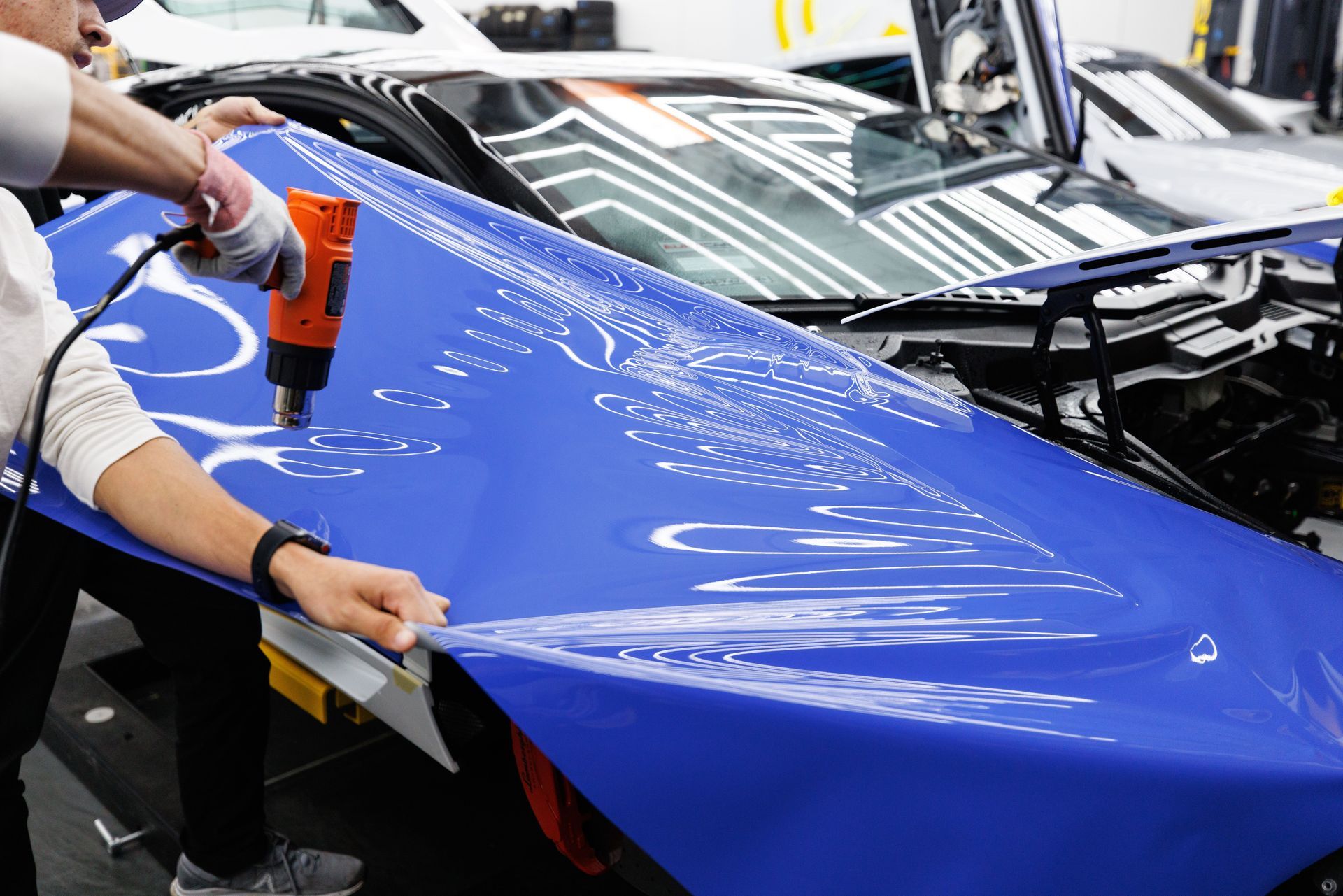
A car wrap works by applying vinyl film over a vehicle’s painted exterior and bonding it to the surface with pressure-sensitive adhesive. During installation, the film is positioned across each panel and pressed down with a squeegee to remove trapped air and create smooth, even contact with the paint.
The vinyl is then shaped around curves, edges, recesses, and body lines using controlled heat. Once the film is fitted to the panel, post-heating helps stabilize the vinyl and adhesive, reducing the risk of lifting, shrinking, or movement after installation.
What Vinyl Types and Finishes Are Used for Car Wraps?
Vinyl Types
Cast vinyl is the industry standard for car wraps, while calendered vinyl is better left to flatter panels and simpler graphics. Cast film stretches and conforms around curves, bumpers, and deep recesses without pulling back to its original shape. That makes it the right choice for full color changes.
Premium cast films often add features that make installation cleaner. Some gloss colors ship with a clear protective layer that guards against scratches during installation and comes off afterward. Many films also use an air-release adhesive that lets the vinyl slide and reposition before it fully bonds.
| Vinyl Type | Main Strength | Typical Use |
|---|---|---|
| Cast vinyl | High conformability | Curves, bumpers, body lines, full color changes |
| Calendered vinyl | Lower cost | Flatter panels, simpler graphics |
Vinyl Finishes
The finish shapes a wrap's look as much as the color does. Gloss delivers a reflective, paint-like shine, while matte gives a flat, nonreflective surface. Color-shift films use multilayer pigments, so the color actually changes as the viewing angle and light move.
| Finish | Appearance | Typical Use |
|---|---|---|
| Gloss | Reflective, paint-like shine | Factory-style color changes |
| Matte | Flat, nonreflective surface | Modern, understated styling |
| Color-shift | Color changes with viewing angle | Custom visual effects |
What Are the Pros and Cons of a Car Wrap?
A car wrap changes a vehicle's look quickly, and the change can be undone later. The trade-off is that vinyl only offers light protection.
Pros
A car wrap offers several practical advantages over paint.
- Fast color change without repainting: A wrap delivers a new color, finish, or custom graphics without a trip to the paint booth.
- Fully reversible: The film comes off the factory paint, so leased cars can go back in factory condition.
- Built-in advertising for businesses: A vehicle wrap puts logos and graphics on the road like a mobile billboard.
- Wide finish options:
Gloss, matte, and color-shift films create looks that would be costly to achieve with paint.
Cons
Vinyl isn't the right fit for every goal, and a few drawbacks are worth weighing first.
- Light protection only: Vinyl handles minor wear, but only thicker PPF stops heavy rock chips and road debris.
- Shorter lifespan than paint: A professionally installed wrap typically lasts 5 to 7 years, while paint is permanent.
- Needs healthy paint underneath: Rust, peeling clear coat, or poor repaints can lift off with the film during removal.
- Results depend on the installer: A rushed install leads to bubbling, lifting, and peeling.
"Wraps are great for quick color changes and leased vehicles, but they are not impact armor. PPF is the thicker solution when the goal is rock-chip resistance."
— South Shore Detail Team
How Is a Car Wrap Installed?
Wrapping a car takes four steps: prep the vehicle, position the vinyl, apply the film, then finish and inspect.
Step 1: Inspect and Prepare the Vehicle
Vinyl shows defects instead of hiding them, so the paint is checked for rust, dents, and peeling clear coat. The car is then washed, decontaminated, and cleaned of wax, with extra care at seams and edges.
Step 2: Measure and Position the Vinyl
Each panel gets vinyl cut with extra material for positioning and edges. The film is adjusted one panel at a time before it fully bonds, which reduces stretching later.
Step 3: Apply and Form the Wrap
A squeegee secures the vinyl and pushes air toward an open edge, while controlled heat helps it follow curves. Overheating or overstretching leaves tension that can cause lifting later.
Step 4: Finish the Edges and Inspect
Excess film is trimmed, and the vinyl is finished around edges, seams, and body contours. A final check catches bubbles, wrinkles, lifting edges, and overstretched spots.
How Long Does a Car Wrap Last?
A professionally installed car wrap typically lasts 5 to 7 years with proper care, although actual lifespan varies by vehicle and use.
Horizontal panels such as the roof, hood, and trunk lid usually wear first, because they take the most direct sun. Over time, UV exposure fades vinyl and makes it brittle, and brittle film is harder to remove cleanly. Garage parking and regular washing go a long way.
Coastal conditions matter here, too. On the South Jersey Shore, coastal exposure and winter road salt can make a wrap show wear sooner.
How Do You Care for a Wrapped Car?
Gentle hand washing and prompt contaminant removal keep a wrapped car in good condition for its full 5- to 7-year lifespan.
- Hand wash gently: Regular hand washing is the safest way to clean a wrapped car.
- Skip abrasive brushes and harsh chemicals: Both place unnecessary stress on the vinyl and its edges.
- Remove contaminants promptly: Clear off road salt, bird droppings, and bug residue before they sit on the film.
- Keep high-pressure water off the edges: Direct spray at panel edges can stress the wrap.
- Park in a garage or covered area when possible:
Less sun exposure slows fading and brittleness.
How Does a Car Wrap Compare With Paint and PPF?
A car wrap, paint, and ppf can all change or preserve a vehicle’s exterior appearance, but they serve different purposes. A wrap is primarily for changing color, finish, or graphics; paint provides a permanent finish; and PPF is designed to protect the paint from physical damage.
| Factor | Car Wrap | Paint | PPF |
|---|---|---|---|
| Primary purpose | Change color, finish, or graphics | Create or restore a permanent finish | Protect paint from physical damage |
| Material | Vinyl film | Automotive paint and clear coat | Transparent polyurethane film |
| Appearance | Wide range of colors, finishes, and graphics | Permanent color and finish options | Usually preserves the existing paint appearance |
| Rock-chip protection | Limited | Limited | High |
| Scratch protection | Light surface protection | Limited | Helps protect against many surface scratches |
| UV protection | Some protection depending on film | Clear coat provides some protection | Helps protect the underlying paint from UV exposure |
| Customization | High | High | Low |
| Removable | Yes | No | Yes |
| Best suited for | Appearance changes and graphics | Permanent color or finish changes | Long-term paint protection |
A car wrap is primarily a customization solution, while PPF is primarily a protection solution. Paint sits between them in terms of purpose: it creates the vehicle’s permanent exterior finish rather than adding a removable film layer.
When impact protection is the priority,
South Shore Detail installs
CovrGard® PPF and backs the work with a lifetime warranty. Our guide to
PPF for cars explains how PPF works and what it covers.
Choosing The Right Car Wrapping In Egg Harbor Township, NJ
A good car wrap consultation covers four things: paint condition, finish choice, intended use, and removal plans. Paint condition shows whether the adhesive will bond and release cleanly. Intended use points toward a full or partial wrap. Removal plans matter most on leased vehicles, since those cars need to go back in factory condition.
South Shore Detail offers professional
vinyl wrapping in Egg Harbor Township, and the team covers each of these points before any film goes on. The shop inspects the vehicle's paint condition, then walks through finish options, expected maintenance, and whether a full wrap, a partial wrap, or PPF better fits the owner's goals.
Not sure which car wrapping fits your vehicle? Send a few photos to 267-876-6160 for a recommendation based on the vehicle, paint condition, driving habits, and protection goals.
Frequently Asked Questions
About the Author
South Shore Detail is a family-owned vehicle appearance and protection shop in Egg Harbor Township, NJ, serving drivers throughout Atlantic County and the South Jersey Shore. With 10+ years of car detailing experience and 260+ 5-star customer reviews on Google, the team provides vinyl wrapping, CovrGard® paint protection film and window tint, Ceramic Pro ceramic coating, auto detailing, and boat detailing under one roof.
Last updated: September 2026