How to Clean Vinyl Boat Seats: A Comprehensive Guide
Cleaning vinyl boat seats safely starts with a marine vinyl cleaner, a soft-bristled brush, clean-water rinsing, thorough drying, and appropriate UV protection. This routine helps remove sunscreen, salt residue, dirt, and early mildew while reducing unnecessary wear on the vinyl's protective surface, especially in sunny, humid coastal conditions.
Key Takeaways
- Marine vinyl relies on a protective surface layer that can be damaged by harsh chemicals and abrasive cleaning.
- A five-step routine of wetting, gentle cleaning, rinsing, drying, and protecting handles most routine sunscreen, salt, and dirt buildup.
- Drying seats before covering them helps reduce the moisture that supports mildew growth.
- UV protectants wear over time, so follow the product label for reapplication frequency.
Why Marine Vinyl Needs Its Own Care Routine
Marine vinyl lasts only as long as its topcoat, the thin protective finish that carries UV inhibitors and stain resistance. Every cleaning decision comes down to one question: does this product or tool preserve that layer?
Beneath the topcoat, plasticizers help keep the vinyl soft and flexible. Harsh chemicals and excessive abrasion can damage the protective surface and contribute to fading, stiffness, and cracking over time, particularly with repeated UV exposure. Boats working out of Great Egg Harbor Bay and Absecon Inlet face that pressure every weekend, with salt spray, sunscreen oils, and summer humidity all settling into the same seams.
Timing matters as much as product choice. Sunscreen and salt residue wipe off easily the day they land, but the same film baked in over several hot weekends bonds to the grain and can contribute to heavier buildup and mildew growth. Seat manufacturers also use different finishes, so the care tag or owner's manual always takes priority over general advice, including this guide.
Products to Use and Avoid When Cleaning Boat Vinyl Seats
A pH-neutral marine vinyl cleaner, a soft-bristle brush, microfiber towels, and two buckets cover nearly every routine cleaning. The products to avoid are the ones that dissolve, abrade, or dry out the topcoat.
| Safe for marine vinyl | Avoid, and why |
|---|---|
| pH-neutral marine vinyl cleaner | Undiluted bleach: weakens stitching and can discolor vinyl |
| Soft-bristle brush for seams and piping | Acetone and lacquer thinner: dissolve the finish on contact |
| Microfiber towels for rinsing and drying | Ammonia-based glass cleaners: dry the surface and may contribute to cracking with repeated use |
| Two buckets, one for cleaner and one for rinse water | Scouring pads and melamine foam sponges: micro-abrade the topcoat |
| 1:1 white vinegar and water for light soil and early mildew | Citrus degreasers, wax, and oily dressings: may leave residue or affect the vinyl's finish |
The two-bucket method is a small habit with a real payoff, because it keeps dirty rinse water from going back onto a seat that was just cleaned. Any new product also deserves a spot test on a hidden area, such as the underside of a cushion flap.
How to Clean Vinyl Boat Seats in Five Simple Steps
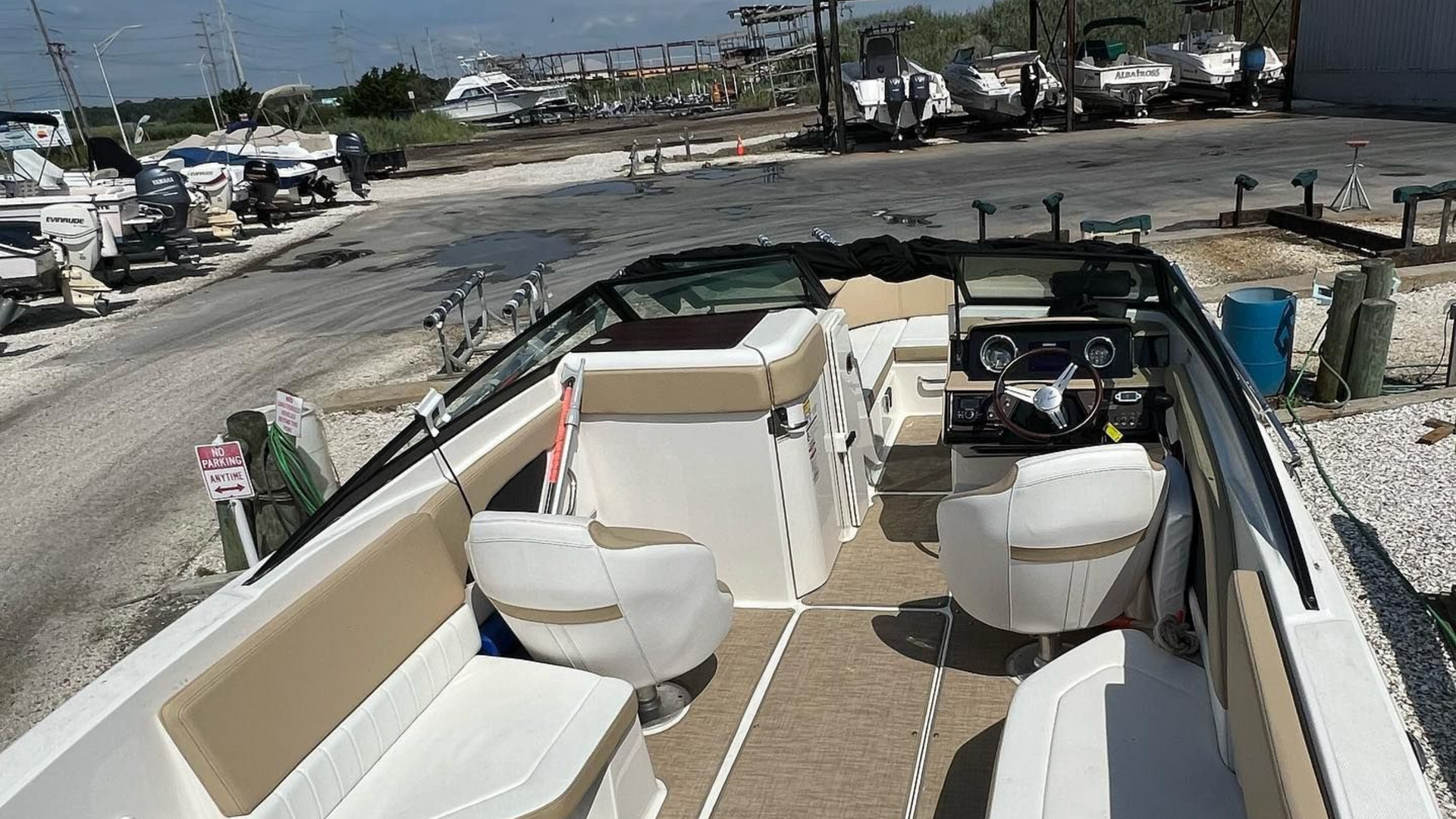
The safest routine works one seat section at a time so the cleaner never dries on the surface. Shade and cool vinyl give the most control, which makes early morning or a covered slip the best time to work.
1. Wet the seat: Fresh water lifts loose salt and sand before any cleaner touches the vinyl.
2. Clean gently and let the product dwell: A soft-bristle brush works the cleaner in small circles, with extra passes along seams, piping, and backrest edges. Follow the product label for any recommended dwell time, and do not let the cleaner dry on the surface.
3. Let it dwell briefly: A short dwell time, as directed on the label, loosens sunscreen and grime without letting the cleaner dry.
4. Rinse completely: Leftover cleaner attracts dirt and can leave film, so a thorough rinse matters as much as the scrub.
5. Dry, then protect: Microfiber towels dry the surface and stitching, and a UV protectant goes on only once the vinyl is fully dry.
Direct afternoon sun on an open dock in Somers Point or Margate City can cause cleaning products to dry quickly, increasing the chance of streaks on both white and dark vinyl.
How to Handle Mildew and Stubborn Stains
Most mildew and set-in stains respond to targeted spot treatment, patience, and a second gentle pass rather than a stronger chemical. The table below pairs common Jersey Shore seat stains with a safe first step and a sensible escalation.
| Stain | First step | If it remains |
|---|---|---|
| Early mildew | 1:1 white vinegar solution, soft brush, rinse | Marine mildew remover labeled safe for vinyl |
| Sunscreen film | Marine vinyl cleaner, extra pass on seams | Longer dwell time, then rinse and protect |
| Blue cover transfer | Marine vinyl cleaner as soon as possible | Professional assessment, since dye can set |
| Spider droppings | Marine vinyl cleaner and soft brush | Gentle baking soda paste, then rinse |
| Nail polish | Blot, do not rub | Follow the manufacturer's stain-removal guidance or seek professional assessment |
| Pink staining | Marine vinyl cleaner | Upholstery assessment, since persistent staining may indicate contamination beneath the surface |
Bleach earns a place only when the seat manufacturer lists the vinyl as bleach-cleanable, and then only at the dilution in that manufacturer's care guide, followed by several clean-water rinses.
Prevention does more than any remover. A damp cushion under a sealed cover can stay wet for days in a humid August marina, which is exactly the environment mildew needs. Drying seats before covering them, switching to a breathable cover, and opening seat compartments after each trip remove that moisture at the source.
How to Keep Seats Protected Through the Season
A marine UV protectant on clean, dry vinyl slows fading and cracking and makes the next cleaning noticeably easier. Protection wears off, so it works best as part of a seasonal rhythm rather than a one-time treatment.
Reapplication frequency varies by product, exposure, and manufacturer instructions. Some marine protectants recommend reapplication every 30 to 45 days during periods of heavy sun exposure. Apply protectant out of direct sunlight and wipe the surface completely dry to avoid streaks and a slippery finish.
A simple rhythm keeps seats in good shape all year:
- Spring launch: Deep clean and apply protectant to set a clean baseline.
- Summer: Rinse and dry after each trip, with protectant reapplied according to the product label and exposure conditions.
- Fall haul-out: Deep clean and dry fully before the winter cover goes on.
- Winter layup: Use a breathable cover, and store removable cushions indoors when possible.
When a Seat Needs More Than Cleaning
Some seat problems sit below the surface, where no cleaner can reach. Cracked or brittle vinyl, foam that stays damp or musty, and black spotting that keeps returning along the seams can indicate damage inside the cushion.
A quick press test helps distinguish surface buildup from deeper problems. Vinyl that flexes cleanly and rinses fresh may only need cleaning. Vinyl that feels stiff, crackles, or leaves a damp feel under the hand may need assessment by a marine upholsterer. Boats with set-in mildew, cover transfer, or a full season of buildup may need more than routine seat cleaning, and a thorough
boat detailing process
can address broader interior and exterior cleaning needs beyond the seats alone.
South Shore Detail has 10+ years of industry experience and provides
boat detailing for seating, upholstery, carpets, and other interior surfaces using marine-appropriate products. The
cost of boat detailing varies based on boat size, condition, services required, and level of buildup.
"The most common seat damage we see doesn't come from the sun. It comes from household cleaners. Owners scrub with whatever is under the sink, strip the topcoat, and then the Jersey Shore sun finishes the job in a single season. A pH-balanced marine cleaner and a dry seat before the cover goes on prevent most of what we end up fixing.
— South Shore Detail Team
If you're unsure whether your boat seats need cleaning, repair, or replacement, South Shore Detail can assess their condition and recommend the appropriate next step.
Frequently Asked Questions
About the Author
South Shore Detail is a family-owned detailing and protection shop in Egg Harbor Township, NJ, caring for boats and vehicles across Atlantic and Cape May counties. For 10+ years, the team has treated the damage salt air, summer UV, and marina humidity leave behind, earning a 5-star rating across 260+ reviews on Google. Its services include boat detailing and ceramic coating, auto detailing, Ceramic Pro ceramic coating, CovrGard® PPF, window tinting, and vinyl wrapping.
Last updated: September 2026