What Does Ceramic Coating Do? Benefits, Limits, and Lifespan
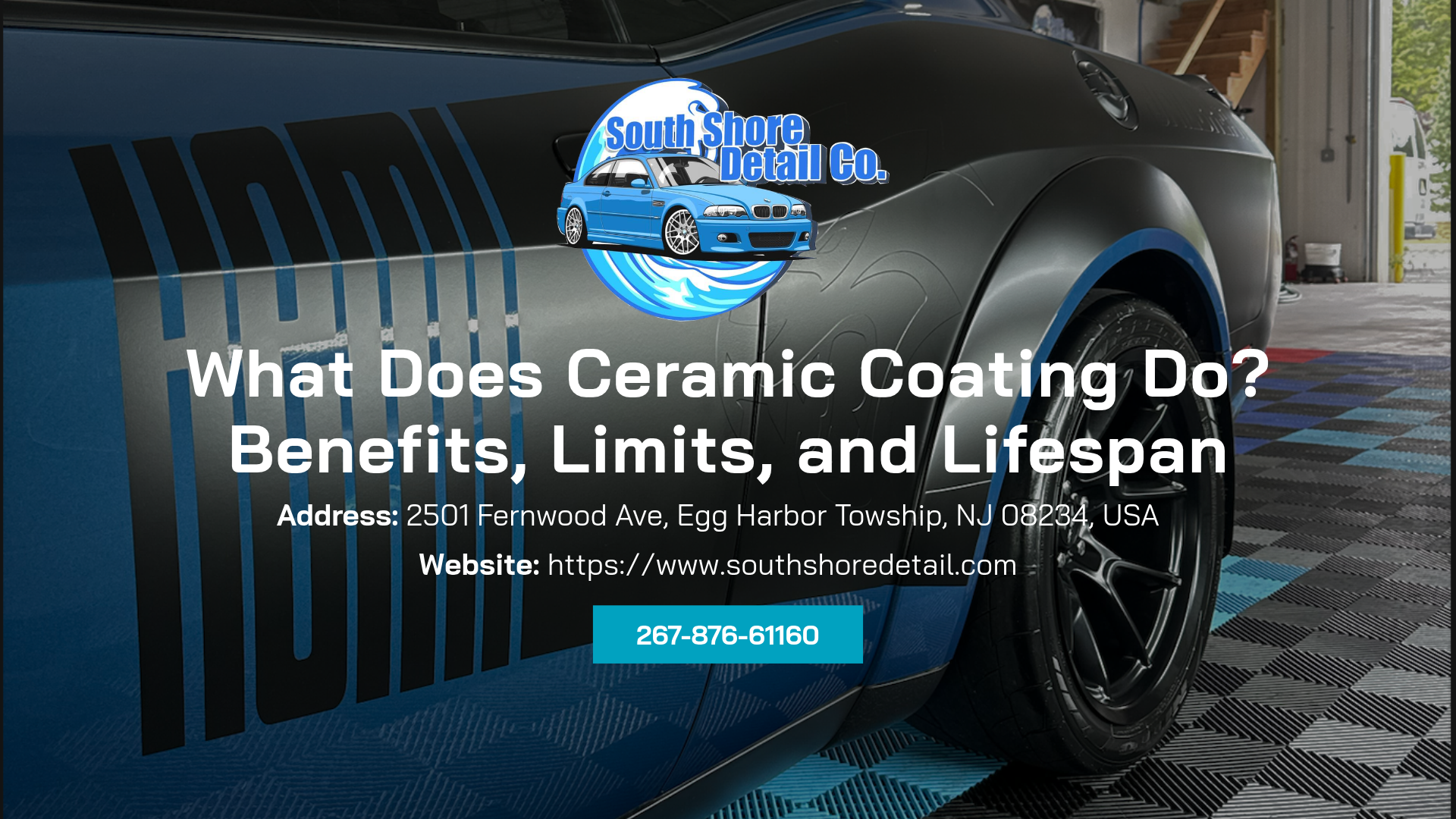
Ceramic coating does three main jobs: it chemically bonds a thin SiO2 or SiC layer to a vehicle's clear coat, shields the paint from UV rays, salt, and chemical contaminants, and makes the surface hydrophobic so it stays cleaner longer. Professional coatings typically last 2 to 5 years, but no coating stops rock chips.
Key Takeaways
- Ceramic coating forms a semi-permanent bond with factory clear coat, unlike carnauba wax, which typically lasts 4 to 8 weeks.
- A cured coating resists UV fading, bird droppings, tree sap, and road salt, and beads water at contact angles above 100 degrees.
- Professional SiO2 coatings typically last 1 to 5 years, and some premium SiC formulations are rated for 7 to 10 years.
- Most coatings are rated 9H on the pencil hardness scale, which resists light wash marring but not rock chips.
- Paint correction should come before ceramic coating, because a 1 to 3 micron coating locks in any swirls left on the clear coat.
What Is Ceramic Coating and How Does It Work?
Ceramic coating is a liquid polymer that chemically bonds with a vehicle’s clear coat and cures into a thin, semi-permanent protective layer. Its main active ingredient is usually silicon dioxide (SiO2), the same compound found in quartz and glass. That chemical bond is why a coating lasts years instead of the weeks typical of wax.
Most modern coatings use nano-ceramic particles smaller than 100 nanometers, which lets the liquid fill the microscopic pores of clear coat. As the carrier solvents evaporate, the resin cross-links into a hard film roughly 1 to 3 microns thick, thinner than a human hair yet tough enough that it does not wash off with soap. Many formulas also add titanium dioxide (TiO2) for UV stability, while newer premium blends use silicon carbide (SiC) or graphene for added durability and slickness.
What Does Ceramic Coating Protect Your Vehicle From?
Ceramic coating protects paint from UV rays, oxidation, bird droppings, tree sap, acid rain, road salt, and brake dust. It works as a sacrificial barrier, so contaminants attack the cured layer before they reach the clear coat.
Sunlight slowly breaks down clear coat, which causes fading and chalky oxidation, especially on red and black paint. Bird droppings and sap are acidic and can etch bare clear coat within days in summer heat, and a coating buys the owner time to wash them off.
What Are the Benefits of Ceramic Coating?
Beyond protection, ceramic coating changes how paint behaves and looks, making the surface easier to clean and giving it a deeper, glossier finish.
Hydrophobic Properties: Self-Cleaning and Water Beading Effects
A cured coating makes paint hydrophobic, so water forms tight beads and rolls off. Most coatings produce water contact angles above 100 degrees, compared with roughly 70 to 90 degrees on bare clear coat. The rolling beads carry loose dust with them, a self-cleaning effect that slows grime buildup and leaves fewer water spots after rain.
Appearance Benefits: Enhanced Gloss and Shine
Ceramic coating adds gloss and color depth, producing the wet-look finish of freshly polished paint. The smooth cured layer reflects light evenly, so dark colors look richer. The coating cannot hide defects, though, so any swirls left in the paint stay visible under it.
Scratch Resistance and Hardness: What Ceramic Coating Can and Cannot Do
Ceramic coating adds a hard, slick film that resists light surface marring, but it is not impact protection. Most products are rated 9H on the pencil hardness scale, a rating that describes the thin coating film, not the paint below.
What ceramic coating can do:
- Resist light swirl marks and marring from washing and drying.
- Reduce fine scratches from dust, towels, and light contact.
- Keep the surface slick, so dirt slides off instead of grinding into the paint.
What ceramic coating cannot do:
- Stop rock chips from gravel and road debris.
- Prevent door dings, key scratches, or parking lot damage.
- Remove scratches or swirls that are already in the paint.
How Long Does Ceramic Coating Last?
Ceramic coating lifespan typically ranges from 1 to 5 years, and some premium formulations are rated for 7 to 10 years with documented maintenance. Consumer spray products usually last a few months to a year. No coating is permanent, and fading water beading is usually the first sign of wear.
How Long Does Ceramic Pro Last?
Ceramic Pro, a nano-ceramic coating brand sold through certified installers, ties durability to the number and type of layers applied. A single layer of its lighter top coat typically carries a 2-year warranty, one layer of Ceramic Pro 9H carries 5 years, and multi-layer 9H packages carry a lifetime warranty with documented maintenance. With 10+ years of industry experience, South Shore Detail installs Ceramic Pro in all three warranty tiers at its Egg Harbor Township shop.
Ceramic Coating vs. Wax: Key Differences
Ceramic coating chemically bonds to paint and lasts years, while wax sits on the surface and lasts weeks to a few months. Synthetic sealants fall in between, and PPF is a physical film rather than a liquid product.
| Protection Type | Typical Durability | How It Attaches | Best At | Main Limitation |
|---|---|---|---|---|
| Carnauba wax | 4 to 8 weeks | Sits on the surface | Warm gloss, low cost | Frequent reapplication |
| Synthetic sealant | 4 to 6 months | Surface adhesion | Moderate chemical resistance | Wears off with washing |
| Ceramic coating | 2 to 5 years (premium up to 10) | Chemical bond with clear coat | UV, chemical, and water-spot resistance | No impact protection |
| Paint protection film | 5 to 10 years | Adhesive urethane film | Rock chips and debris impacts | Higher cost per panel |
For most owners, wax is a short-term cosmetic product and ceramic coating is long-term surface protection. A side-by-side breakdown is available in is ceramic coating better than wax.
Professional Application Process and Preparation Requirements
Professional ceramic coating application follows a fixed sequence of decontamination, paint correction, panel prep, coating, and curing. The coating locks in whatever condition the paint is in, so preparation usually takes longer than the coating itself.
- Wash and decontaminate. A hand wash, iron remover, and clay bar strip embedded contaminants from the clear coat.
- Correct the paint. Machine polishing removes swirls and light scratches so they are not sealed under the coating.
- Panel wipes. An isopropyl alcohol or dedicated prep spray removes polishing oils so the coating can bond.
- Apply and level. The coating is applied by hand in small sections, then leveled before it flashes.
- Cure. The vehicle stays dry for 24 to 48 hours, and full chemical cure takes about 1 to 3 weeks.
Most professional jobs take 1 to 3 days, depending on how much correction the paint needs. For a step-by-step look at the workflow, see paint correction before ceramic coating.
Where Can Ceramic Coating Be Applied?
Ceramic coating can be applied to paint, glass, wheels, brake calipers, plastic trim, and chrome, with a dedicated formula for each material. Wheel coatings resist baked-on brake dust, glass coatings improve visibility in rain, and marine-grade coatings protect boat gelcoat from saltwater and UV.
Ceramic Coating Cost: Professional vs. DIY
The cost of professional ceramic coating in the United States commonly runs $500 to $2,500, and multi-year, full-vehicle packages often exceed $2,000. Price depends on vehicle size, paint condition, the level of correction required, coating grade, and how many surfaces are included. Paint correction is the biggest variable, while wheels, glass, and trim are usually priced as add-ons. DIY kits typically cost $50 to $300, but results depend heavily on the owner's prep skill.
How to Maintain Ceramic Coating
Maintaining ceramic coating comes down to gentle hand washing, the right products, and a yearly check-up. Regular washing is still needed, but it goes faster and easier on coated paint.
- Use a pH-neutral shampoo: Harsh degreasers and strong chemicals wear the coating down faster.
- Wash with the two-bucket method: One bucket holds soapy water and the other holds rinse water, so dirt doesn’t go back onto the paint.
- Dry with soft microfiber towels: They lower the risk of fine scratches and swirl marks.
- Skip brush car washes: Their stiff bristles scrape at the coating every time you go through.
- Schedule an annual inspection: Many manufacturers recommend a yearly check to confirm the coating is still performing.
- Apply an SiO2 topper when beading fades: It brings back the water-beading effect and adds a fresh layer of protection
Ceramic Coating for Atlantic County Vehicles: Why It Matters
Vehicles along the South Jersey shore face salt air, high summer humidity, strong UV, and winter road salt, a combination that speeds up oxidation and contamination. Ceramic coating is especially useful in this climate because it resists exactly those chemical and environmental threats.
Egg Harbor Township sits on the mainland a few miles west of the barrier islands, close enough to the back-bay salt marshes that salt air and coastal humidity reach driveways in English Creek, Bargaintown, Cardiff, and Scullville. Daily drives on the Garden State Parkway, Atlantic City Expressway, Black Horse Pike, and Route 9 add road film and brake dust, while summer trips to Ocean City, Margate City, and Ventnor City bring sand and salt spray home. In winter, New Jersey road crews treat these highways with salt and brine, which clings to wheels and rocker panels.
Many Egg Harbor Township vehicles also park outdoors through humid summers, and seasonal shore cars often sit idle through the off-season. South Shore Detail sees these conditions firsthand on vehicles and boats across Atlantic County.
Expert Insight: "After more than 10 years of detailing near the Jersey Shore, we’ve learned humidity matters as much as the product. On a humid August day, a coating flashes faster, so we level smaller sections to avoid high spots. We also strip salt film and iron fallout first, because a coating only bonds to clean, bare clear coat." - South Shore Detail.
What to Do Next
The most reliable way to choose a ceramic coating is an in-person paint inspection, because it confirms the clear coat’s condition, the level of correction needed, and how the vehicle is driven and stored. Many professional detailers offer free quotes, so owners can compare coating tiers and warranty lengths before committing.
Get your free quote from
South Shore Detail in one quick call to
267-876-6160. Tell us your car’s make and model, its paint condition, and whether it’s garaged or parked outside, and we’ll match you with the right
ceramic coating in Egg Harbor Township, NJ.
Frequently Asked Questions
About the Author
South Shore Detail is a family-owned vehicle appearance and protection shop at 2501 Fernwood Ave in Egg Harbor Township, NJ, with 10+ years of industry experience and a 5-star rating across 260+ customer reviews. The shop provides auto detailing, Ceramic Pro coatings, CovrGard® window tint and PPF, vinyl wrapping, and boat detailing across Atlantic County.
Last Updated: October 2026